
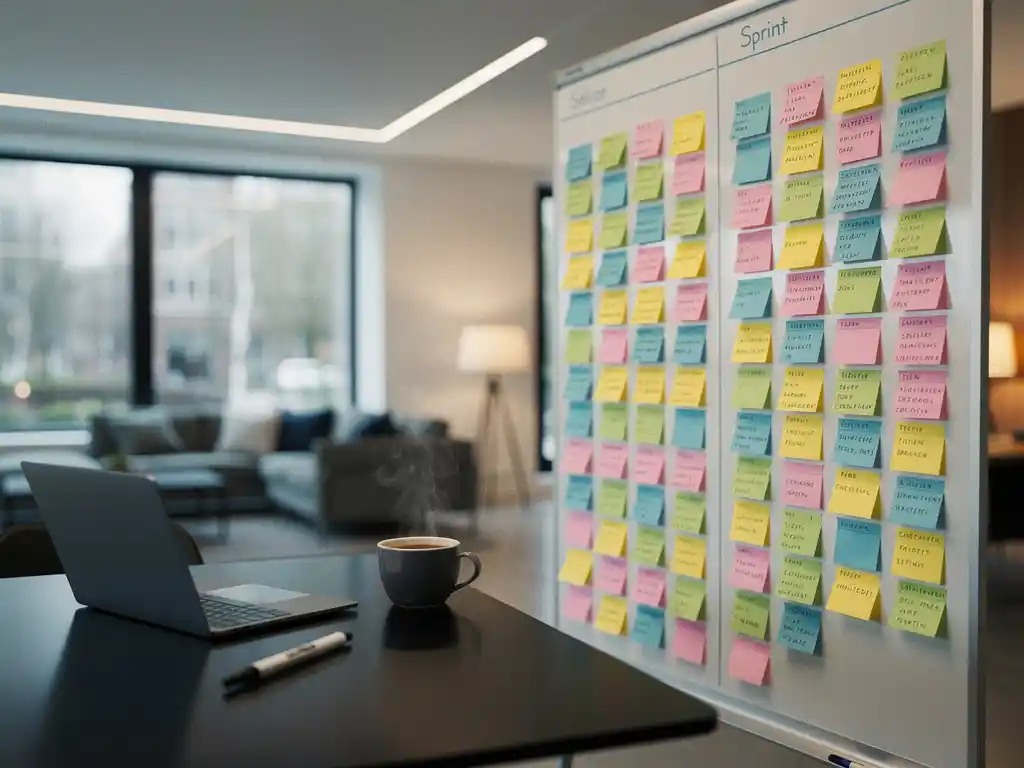
Extreme programming (XP) and Scrum are both agile frameworks, but they serve different purposes. Scrum is a project management framework that defines roles, ceremonies, and workflows for delivering software iteratively. Extreme programming is an engineering discipline focused on technical practices that improve code quality and development speed. The two are complementary rather than competing, and many teams use elements of both. The questions below unpack the key differences in practical terms.
Which methodology is better for software development teams?
Neither XP nor Scrum is universally better. Scrum is better suited to teams that need a structured, flexible process for managing work and aligning stakeholders. Extreme programming is better for teams where code quality, rapid feedback, and engineering rigour are the primary concerns. The right choice depends on your team’s maturity, the nature of the product, and how much technical discipline the project demands.
Scrum gives teams a clear rhythm through sprints, retrospectives, and defined roles, making it easier to adopt in organisations new to agile. Extreme programming demands a higher baseline of engineering discipline, including practices like test-driven development and pair programming that require deliberate investment to embed. For many product teams, Scrum provides the process scaffolding while XP provides the engineering backbone, which is why combining them is so common in practice.
How do XP and Scrum handle team roles differently?
Scrum defines three specific roles: the Product Owner, the Scrum Master, and the Development Team. Extreme programming does not prescribe formal roles in the same way. XP assumes a close, collaborative relationship between the customer and the team, with the customer embedded in the process rather than represented by a single role. This makes XP teams flatter and more self-directed by design.
In Scrum, the Scrum Master is responsible for protecting the team and facilitating the process, while the Product Owner holds accountability for the backlog and business value. XP distributes these responsibilities more organically. The customer in XP writes acceptance tests and prioritises stories directly, reducing the abstraction layer between business needs and technical delivery. This works well in smaller, high-trust environments but can become difficult to sustain in large organisations with complex stakeholder structures.
What engineering practices does XP require that Scrum doesn’t?
Extreme programming mandates specific engineering practices that Scrum leaves entirely to the team’s discretion. These include test-driven development (TDD), pair programming, continuous integration, refactoring, collective code ownership, and a sustainable pace of work. Scrum defines how work is organised and delivered, but says nothing about how code is actually written.
This is one of the most significant practical differences between the two frameworks. A Scrum team can technically function without any of these practices, which sometimes leads to technical debt accumulating over time. Extreme programming treats engineering discipline as non-negotiable, building quality into the development process rather than relying on reviews and testing at the end of a cycle. For teams working on complex or long-lived software products, the XP engineering practices tend to produce more maintainable, resilient codebases over time.
How do iteration lengths compare between XP and Scrum?
Scrum sprints typically run for one to four weeks, with two weeks being the most common choice. Extreme programming iterations are traditionally shorter, often one week, reflecting XP’s emphasis on rapid feedback and continuous course correction. Both frameworks use time-boxed iterations, but XP’s preference for shorter cycles pushes teams to break work into smaller, more testable units.
The shorter XP iteration length reinforces its engineering practices. When you release and integrate code every week, the cost of defects is lower and the feedback loop with the customer is tighter. Scrum’s flexibility on sprint length makes it easier to adapt to different team sizes and organisational contexts, but teams that choose longer sprints sometimes find that problems compound before they surface in a retrospective.
Can XP and Scrum be used together?
Yes, XP and Scrum can be used together, and this combination is widely adopted in practice. Scrum provides the project management structure, including sprint planning, daily standups, sprint reviews, and retrospectives. Extreme programming contributes the engineering practices, such as TDD, pair programming, and continuous integration, that improve the quality of what gets built within that structure.
This hybrid approach is sometimes called Scrum with XP engineering practices. It works because the two frameworks operate at different levels: Scrum governs how the team organises and delivers work, while XP governs how the team writes and maintains code. There is no inherent conflict between them. Teams adopting this combination typically start with Scrum’s ceremonies and then incrementally introduce XP practices as team capability grows, rather than trying to implement everything at once.
When should an organisation choose XP over Scrum?
An organisation should favour extreme programming over Scrum when code quality and technical rigour are the primary drivers, when the team is small and highly skilled, and when the customer can be closely involved in the development process. XP is particularly well-suited to greenfield projects where establishing strong engineering habits from the outset will pay dividends over the life of the product.
XP is also a strong choice when requirements are expected to change frequently and rapidly. Its short iterations, customer collaboration, and emphasis on simple design make it highly adaptive. Scrum is often the better starting point for larger teams, organisations with complex stakeholder environments, or contexts where the team is still building agile maturity. If engineering discipline is already high and the team is ready to commit to practices like TDD and pair programming consistently, XP delivers a level of technical quality that Scrum alone does not guarantee.
How Bloom Group helps with agile software delivery
Choosing between XP and Scrum, or deciding how to combine them, is rarely straightforward. The right approach depends on your team’s skills, your product’s complexity, and the pace at which your business needs to move. At Bloom Group, we work with mid-sized and large enterprises to design and implement development approaches that match their specific context. Our consultants bring hands-on experience with both agile methodologies and the engineering disciplines that make them effective in practice.
- Assessment of your current development process and identification of gaps in engineering quality or delivery consistency
- Support for greenfield projects where establishing the right agile foundation from day one is critical
- Team as a Service (TaaS) models that embed highly qualified developers directly into your existing teams
- Expertise in data engineering, software development, AI, and product management to support complex digital transformation initiatives
- Practical guidance on introducing XP engineering practices within a Scrum framework, reducing technical debt without disrupting delivery
If you are evaluating how to strengthen your software delivery capability in 2026, we are ready to help you find the right approach for your organisation. Get in touch with us to start the conversation.
Frequently Asked Questions
How do we know if our team is ready to adopt XP engineering practices like TDD and pair programming?
A good starting point is to assess your team’s current testing habits and comfort with collaborative coding. If your team already writes unit tests inconsistently or struggles with code reviews, introducing TDD and pair programming gradually — starting with one or two willing engineers — is more effective than a full rollout. Look for signals like recurring bugs in production, high onboarding friction for new developers, or mounting technical debt as indicators that XP practices would deliver measurable value.
What are the most common mistakes teams make when trying to combine Scrum and XP?
The most frequent mistake is adopting Scrum’s ceremonies without investing in XP’s engineering practices, which creates the illusion of agility without the underlying code quality to sustain it. Another common pitfall is introducing XP practices all at once rather than incrementally, which overwhelms teams and leads to half-hearted adoption. A more sustainable approach is to start with continuous integration and automated testing, stabilise those habits, and then layer in pair programming and TDD once the team has built confidence.
Can XP work for large teams, or is it only practical for small groups?
XP was originally designed with small, co-located teams in mind, typically under twelve people, which is one reason it requires close customer involvement and collective code ownership. Scaling XP to larger organisations is possible but requires deliberate adaptation, often through frameworks like SAFe or LeSS that incorporate XP engineering practices at the team level while adding coordination mechanisms above it. The core XP practices remain valuable at scale, but the flat, self-directed team model needs structural support to function reliably across multiple teams.
How does technical debt typically accumulate differently in Scrum-only teams versus teams using XP practices?
In Scrum-only teams, technical debt often accumulates silently because the framework places no constraints on how code is written — only on how work is organised and delivered. Without practices like TDD, refactoring, and collective code ownership, shortcuts taken during one sprint compound into structural problems that slow delivery in future sprints. XP’s engineering practices create a continuous pressure to keep the codebase clean, which means technical debt is addressed incrementally rather than allowed to build until it becomes a crisis.
What does 'customer involvement' actually look like in an XP project day to day?
In XP, the customer — typically a product owner or business representative — is expected to be available to the team on a near-daily basis, writing user stories, defining acceptance criteria, and answering questions as they arise during development. This is more hands-on than the Product Owner role in standard Scrum, where backlog refinement is often a scheduled, periodic activity. Teams new to XP should set clear expectations with stakeholders upfront, as the model requires a level of business engagement that many organisations are not initially prepared for.
Is there a recommended order for introducing XP practices if we are already running Scrum?
Yes — starting with continuous integration and a solid automated test suite provides the foundation that makes all other XP practices more effective and less risky to introduce. Once those are stable, adding a refactoring discipline and collective code ownership helps reduce silos and improve maintainability. Pair programming and TDD can then be introduced as team norms, ideally supported by dedicated time for practice and retrospective reflection on how the practices are landing rather than simply mandating them from the top down.
How long does it typically take for a team to see measurable benefits after adopting XP engineering practices?
Teams typically begin to see a reduction in production defects and faster onboarding of new developers within two to three months of consistently applying practices like TDD and continuous integration. Longer-term benefits — such as significantly reduced technical debt, faster feature delivery, and improved code maintainability — tend to become clearly measurable after six to twelve months. The timeline depends heavily on the existing state of the codebase and how consistently the practices are applied, which is why coaching support during the transition period tends to accelerate results.
Related Articles
- Why is manual KPI extraction difficult to standardize?
- How can data from documents be sent directly to business systems?
- How Does Iterative Development Reduce Risk in Complex Projects?
- What Is the Difference Between TDD and Spec-Driven Development?
- What Is Spec-Driven Development and Why Is It Gaining Ground?